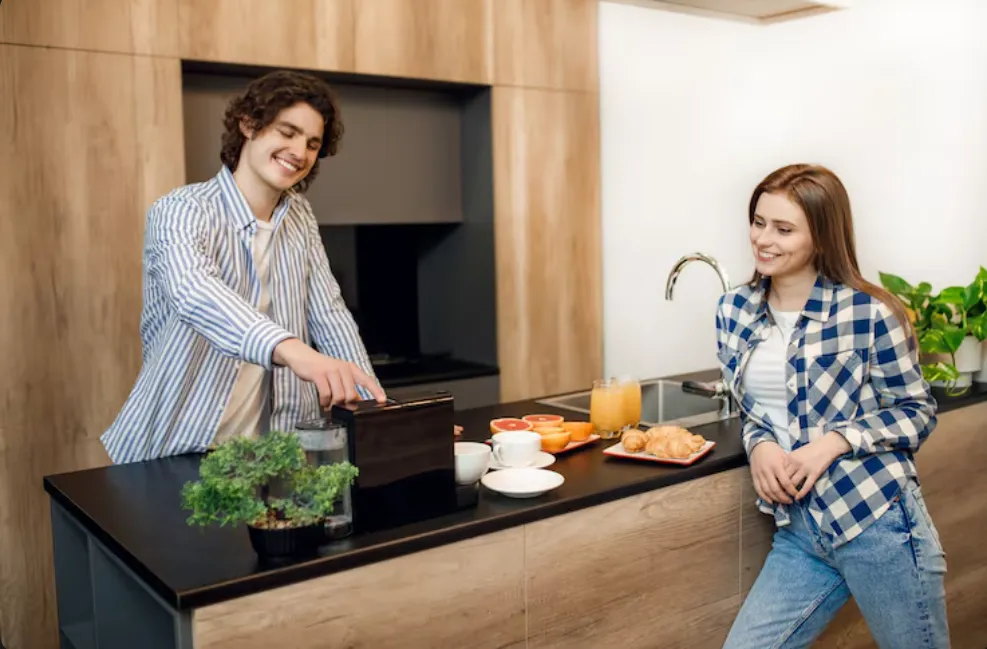
Open-plan living has become one of the defining features of modern UK homes. Kitchens are no longer isolated rooms used only for cooking—they now flow directly into dining and living areas, forming a shared social space. This shift has changed how kitchens are designed, making visual harmony and practicality more important than ever.
In this type of layout, every design element is on display. That means kitchen splashbacks are no longer just functional wall protectors; they are part of the overall interior style seen from multiple angles across the home.
Many homeowners choose suppliers of kitchen splashbacks to create seamless, coordinated designs that work across open-plan environments.
Why Open-Plan Kitchens Need Careful Design
In traditional closed kitchens, design choices are contained within one room. In open-plan spaces, however, the kitchen is visible from the lounge and dining areas at all times.
This creates a few key challenges:
-
The kitchen must match the living room style
-
Visual clutter becomes more noticeable
-
Colour choices affect the entire space
-
Lighting must work across multiple zones
Because of this, every surface—including splashbacks—must contribute to a unified design.
Kitchen Splashbacks as a Visual Anchor
In open-plan kitchens, the splashback often becomes a natural focal point.
This is because:
-
It sits at eye level
-
It spans large sections of wall
-
It sits behind key cooking areas
-
It contrasts with cabinets and worktops
A well-chosen splashback can anchor the kitchen visually, helping define it within a larger living space without needing physical walls.
Glass Splashbacks and Open Space Harmony
Glass kitchen splashbacks are particularly effective in open-plan homes because they support a clean, uninterrupted visual flow.
Unlike tiled surfaces, glass does not introduce busy patterns or grout lines. Instead, it offers a smooth surface that blends into the wider interior design.
This helps maintain:
-
Visual continuity between rooms
-
A clean, uncluttered aesthetic
-
A modern and cohesive look
The result is a kitchen that feels like part of the home rather than a separate functional zone.
Using Light to Connect Living Spaces
Lighting is one of the most important elements in open-plan design. Since kitchens share space with living areas, light must be balanced across the entire environment.
Glass splashbacks help with this by reflecting both natural and artificial light.
This creates:
-
Brighter kitchen zones
-
Improved light flow into dining areas
-
A more open and airy feel
-
Better visual connection between spaces
In smaller open-plan layouts, this effect can make the entire home feel larger.
Choosing Colours for Open-Plan Balance
Colour selection becomes more critical in open-plan kitchens because it affects the entire shared space.
Instead of focusing only on the kitchen, homeowners must consider nearby furniture, flooring, and wall colours in the living area.
Common strategies include:
-
Neutral splashbacks to blend with all zones
-
Soft greys or whites for seamless transitions
-
Deep tones used as controlled feature areas
-
Matching accents with living room décor
Glass splashbacks can be custom colour-matched, making it easier to maintain consistency across open spaces.
Creating Zones Without Walls
One of the main goals in open-plan design is to define separate zones without using physical barriers.
Kitchen splashbacks help achieve this by subtly marking the kitchen area.
For example:
-
A bold splashback behind the hob defines the cooking zone
-
A neutral living room contrasts the kitchen feature wall
-
Reflective surfaces distinguish kitchen activity areas
This zoning effect keeps the space organised without breaking openness.
Reducing Visual Noise in Shared Spaces
Open-plan layouts can quickly feel busy if too many textures or patterns are introduced.
Busy tile designs or heavily patterned finishes can create visual distraction when viewed from the living room.
Glass splashbacks help reduce this issue by offering:
-
Flat, smooth surfaces
-
Minimal visual texture
-
Consistent colour fields
-
Clean reflections instead of patterns
This supports a calmer overall environment.
Integrating Kitchen Design with Living Room Style
In open-plan homes, the kitchen must complement furniture, flooring, and décor in the living area.
Glass splashbacks make this easier because they can be designed to match or complement:
-
Sofa and upholstery colours
-
Feature walls in living areas
-
Flooring materials across the space
-
Lighting styles and fixtures
This integration helps create a unified interior design rather than two separate zones.
Enhancing Modern Minimalist Living Spaces
Minimalist design is especially popular in open-plan homes because it helps control visual complexity.
Glass splashbacks support minimalist interiors by:
-
Removing grout lines
-
Reducing surface clutter
-
Supporting neutral colour palettes
-
Maintaining clean visual lines
This makes the entire space feel more intentional and organised.
Practical Benefits in High-Use Family Spaces
Open-plan kitchens are often high-traffic areas used for cooking, socialising, and entertaining.
Glass splashbacks are ideal for this lifestyle because they are:
-
Easy to clean after cooking
-
Resistant to stains and grease
-
Durable under daily use
-
Hygienic for food preparation areas
This ensures the kitchen remains both stylish and practical.
Creating a Feature Wall in Open Layouts
While subtle designs are often preferred, some homeowners use splashbacks as feature walls to add personality.
This works especially well behind cooking areas, where a bold or reflective glass panel can stand out without overwhelming the rest of the space.
Examples include:
-
Deep navy or charcoal feature panels
-
Metallic finishes for modern luxury
-
Soft coloured gradients for subtle impact
This creates visual interest while keeping the rest of the home balanced.
The Importance of Custom Fit
Open-plan kitchens often include long runs of cabinetry and irregular layouts.
Custom-made glass splashbacks ensure:
-
Seamless wall coverage
-
Accurate socket cut-outs
-
Clean edge alignment
-
A professional finish across large spaces
This precision is essential in high-visibility areas.
The Role of Online Suppliers
Modern homeowners often rely on online suppliers for open-plan kitchen projects because they offer flexibility, customisation, and convenience.
Companies such as Direct Splashbacks provide made-to-measure kitchen splashback solutions suitable for open-plan layouts.
Business Details:
Direct Splashbacks
St. Andrews Business Centre
Mold, Flintshire
North Wales, CH7 1XB
Contact us: [email protected]
Monday – Friday: 9am – 4pm
(Office only — no showroom. Online business only.)
Final Thoughts
Kitchen splashbacks play a much bigger role in open-plan living than in traditional kitchens. They help define zones, improve light flow, and create visual harmony across connected living spaces.
Glass kitchen splashbacks are especially effective because they combine seamless design with practicality, making them ideal for modern UK homes where kitchens are part of a shared social environment.